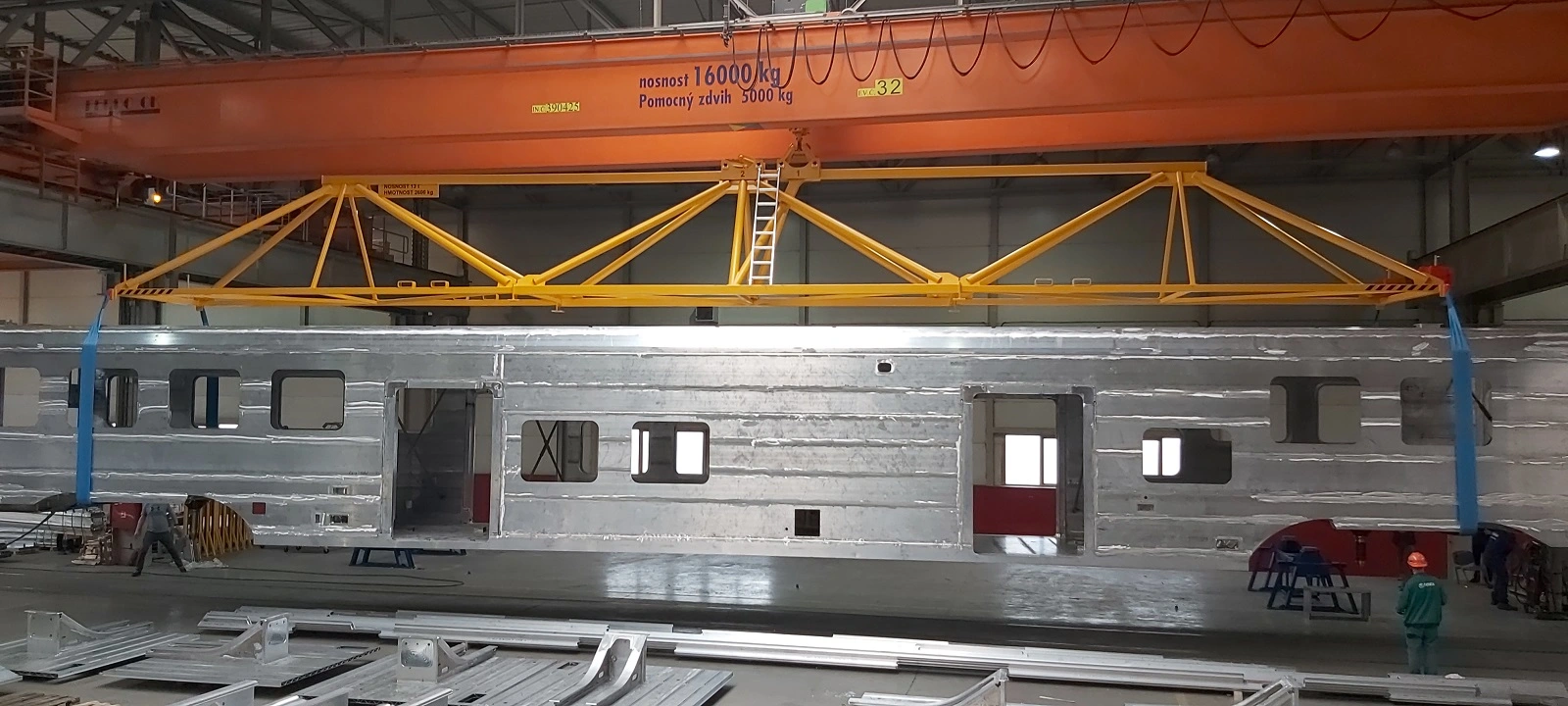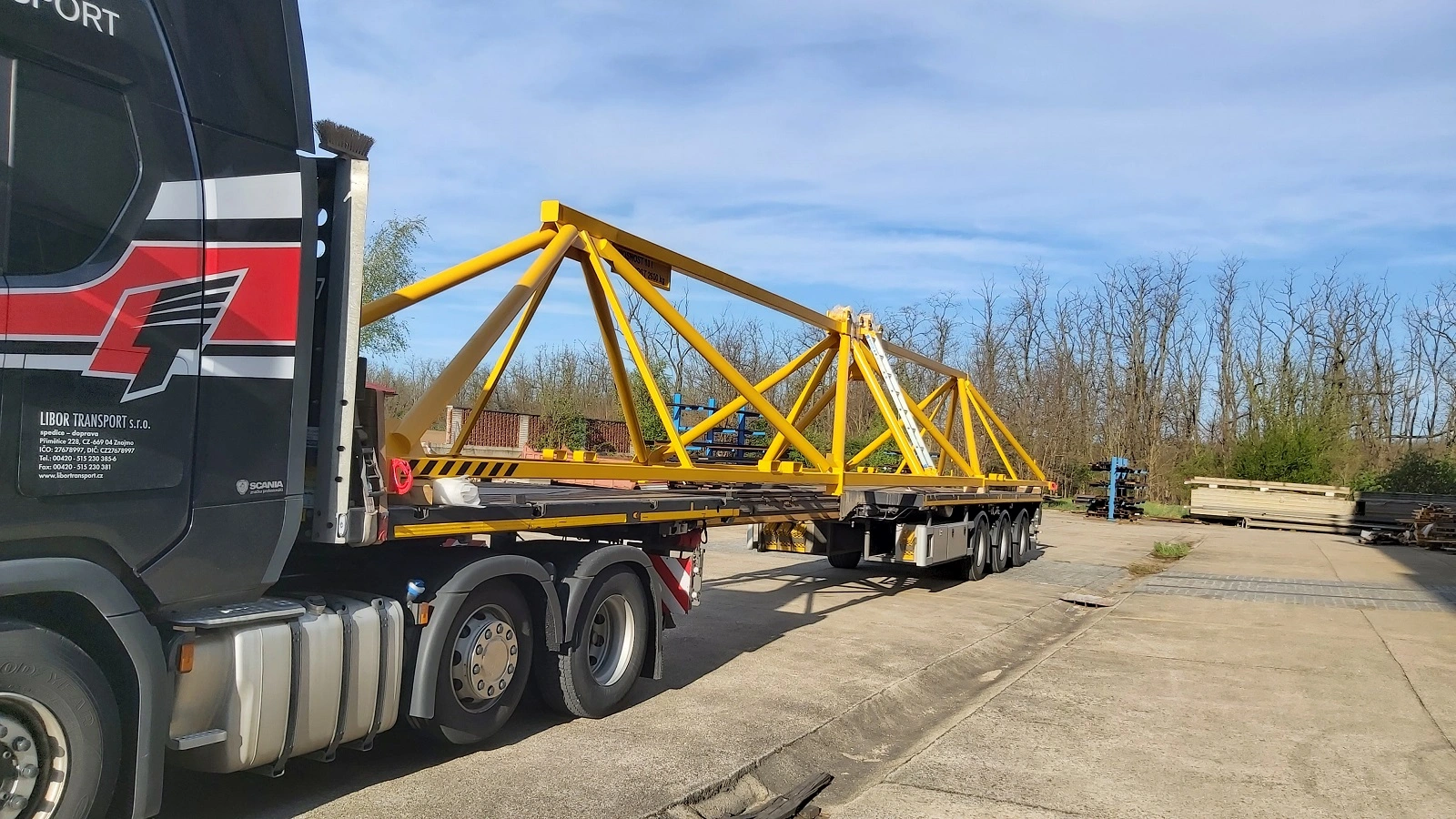
The handling crossbeam was custom-designed for a customer who required a load capacity of 13 tonnes and a span of 20.6 metres, which corresponds to the distance between the crane lifting points on the underside of the body.
The biggest limitation was the weight of the crossbeam, which had to be less than 3,000 kg including accessories, because the crane available for moving the car bodies had a lifting capacity of only 16 tonnes. Another limitation was the maximum lifting height of the crane, which was 8.0 m.
The crossbeam also had to meet the requirement of lifting two different types of car bodies with different centres of gravity.
Our company was the only one of the companies surveyed that was able to fulfil such a demanding assignment, which included the design, assessment, manufacture and delivery of two crossbeams.
The crossbeam was designed with an emphasis on maximum load-bearing capacity vs. weight efficiency. According to the standard, it had to bear three times the load, i.e. 39 tonnes, as well as its own weight.
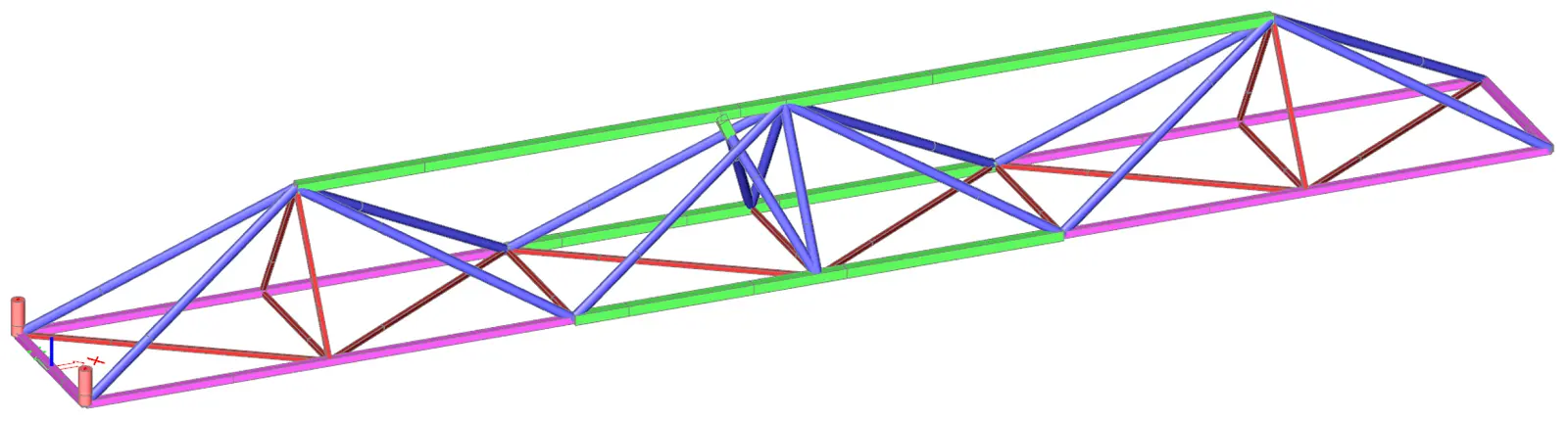
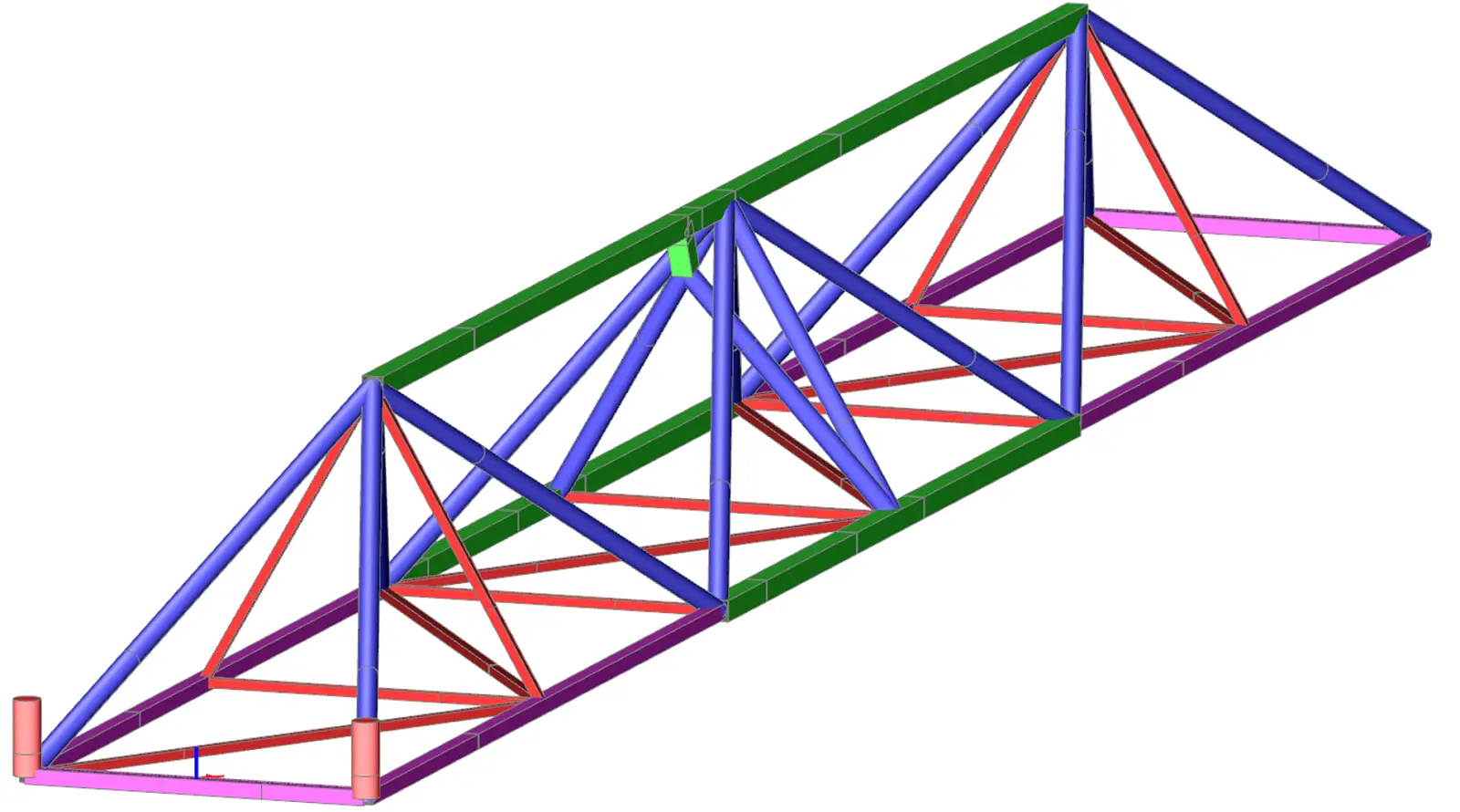
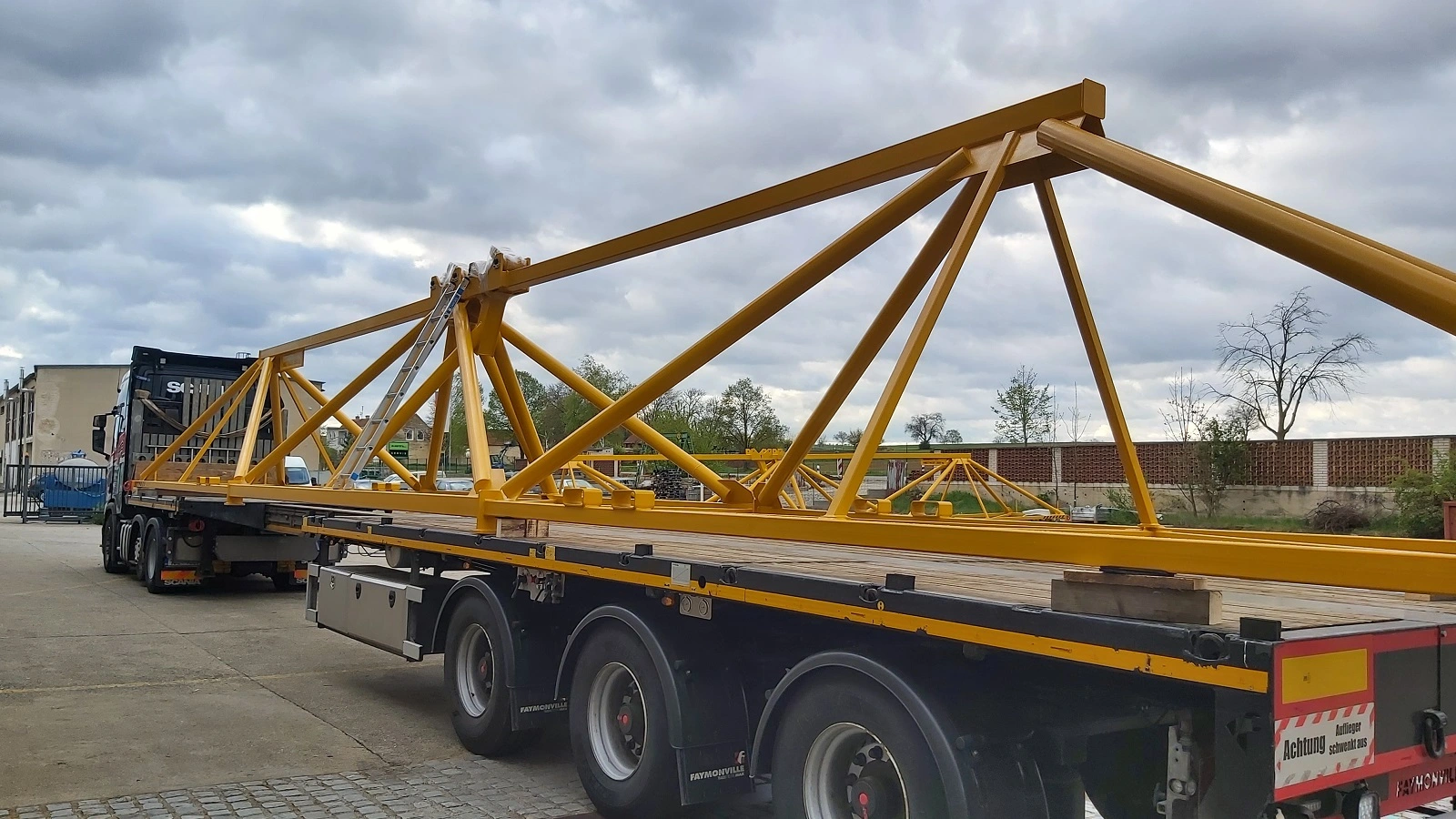
The crossbeam was designed as a triangular spatial truss made of round and square hot-rolled high-strength steel tubes. To reduce weight, different profiles were used in various parts of the structure depending on the stress on the relevant element.
The variability of the centre of gravity of the lifted load, which was approximately 1.0 m, was solved by two different fastening clamps on the crossbeam for the crane’s double hook. The centre of gravity of the crossbeam itself had to be shifted so that it was always aligned with the hook and the centre of gravity of the body. This was solved by a counterweight weighing approximately 250 kg, which could be attached to one end of the crossbeam.
The stability of the entire suspended system of the crossbeam and bodywork also had to be assessed. The crossbeam weighed 2,600 kg, was 20.7 m long, 2.5 m wide and 2.35 m high.